
The holidays can swing from joyful to stressful fast when divorced or separated parents can’t agree on custody arrangements.
What should be a time for celebration sometimes gets tangled up with confusion about schedules, travel, and family traditions.
Parents in Northwest Florida often feel unsure about their rights and options when holiday disputes pop up.
Florida courts believe both parents deserve meaningful holiday time with their kids. That’s why detailed holiday rules in parenting plans matter so much.
If parents can’t agree on the schedule, custody mediation gives families a way to find solutions that actually work.
Mediation helps families skip court battles and focus on what really matters—the kids’ wellbeing.
Building a solid holiday parenting plan takes some real planning and honest communication. Parents who start early and know Florida’s requirements can turn potential fights into smooth celebrations.
Key Takeaways
- Holiday parenting plans need specific legal rules that override regular custody schedules for special occasions.
- Mediation helps parents solve holiday disputes outside court and ensures agreements meet Florida’s legal standards.
- Early planning and clear communication between co-parents help prevent conflicts and let kids enjoy stress-free holidays.
What Is a Holiday Parenting Plan in Florida?

A holiday parenting plan is a special part of the main parenting agreement that spells out where kids spend holidays and special days. In Florida, these plans always take priority over the regular custody schedule during holidays.
Why Holiday Schedules Matter for Children
Holiday schedules give kids a sense of stability when emotions run high. Without a clear plan, children can feel anxious about where they’ll spend Christmas or birthdays.
Shared holidays often work best for younger kids. Sometimes parents split Christmas Day, or they alternate major holidays each year. This way, kids get to see both parents for the big moments.
The Florida parenting plan has to include exact times and dates. Vague stuff like “reasonable holiday time” just leads to fights. Kids need clear schedules to avoid getting caught up in adult arguments.
Courts want children to have real time with both parents when school is out. A good holiday schedule covers the big holidays, birthdays, and school breaks. That helps families sidestep last-minute chaos.
Northwest Florida Realities: Military Families, Travel Distances, Extended Family Gatherings
Military families here face unique headaches when planning for the holidays. Deployments and training can throw normal parenting plan routines out the window.
The holiday schedule should include backup plans for military duty. If one parent deploys at Christmas, they may get extra time at another holiday or school break.
Pensacola, Tallahassee, and Panama City aren’t exactly next door, so long drives matter. Parents need to build in realistic travel time for exchanges. A two-hour drive isn’t nothing, especially with holiday traffic.
Extended family gatherings are a big deal in Northwest Florida. Grandparents sometimes travel across the state, and the parenting plan should accommodate these special visits, which occur only once or twice a year.
What Florida Law Requires in Holiday Parenting Plans

Florida Statute 61.13 requires every custody agreement involving minor children to include specific holiday rules. Courts want detailed schedules for major holidays, school breaks, and special occasions so both parents get meaningful time.
Statutory Requirements
Florida law requires parenting plans in all cases involving kids under 18. Even if parents agree on everything, the court still wants a formal plan on file.
The statute prioritizes the child’s best interests. Parents need to spell out details for holidays, birthdays, and other special days.
Key legal requirements include:
- Specific holiday schedules with dates and times
- Clear exchange procedures and locations
- Decision-making authority for each holiday
- Transportation responsibilities
Courts want to reduce confusion and fights during the holidays. The agreement should say how parents will handle last-minute changes or emergencies.
Parents can’t just wing it or rely on informal agreements for holidays. The court expects everything in writing.
Standard Holidays Included
Florida parenting plans must address certain holidays that courts consider important for family bonding. These receive additional legal protection due to their emotional and cultural weight.
Major holidays usually include:
- Thanksgiving and Christmas/winter break
- New Year’s Day and Easter
- Mother’s Day and Father’s Day
- Memorial Day and Independence Day
- Labor Day and Halloween
School breaks need their own section in the plan, separate from individual holidays. Parents should plan for spring break, summer vacation, and winter recess.
The child’s birthday often gets special treatment. Some parents alternate years; others split the day.
Religious holidays should be included based on family traditions. Courts try to respect different spiritual practices in these plans.
Court Versus Mediation Pathways
Parents can set up holiday schedules through the court or by using mediation. Each path has its pros and cons, depending on the family.
Court-ordered plans usually:
- Follow standard holiday rotations
- Have stricter enforcement
- Don’t always fit unique family needs
Mediated agreements let you:
- Get creative and tailor the plan
- Make decisions together
- Change things more easily if life changes
Mediation creates better long-term results for holiday arrangements. When parents work together, they’re more likely to stick to the plan.
The court prefers that parents try mediation first—judges like it when parents come up with agreements that fit their kids and family traditions.
If mediation fails, the court will just impose a standard schedule, which may not make anyone happy.
Common Custody Disputes During the Holidays
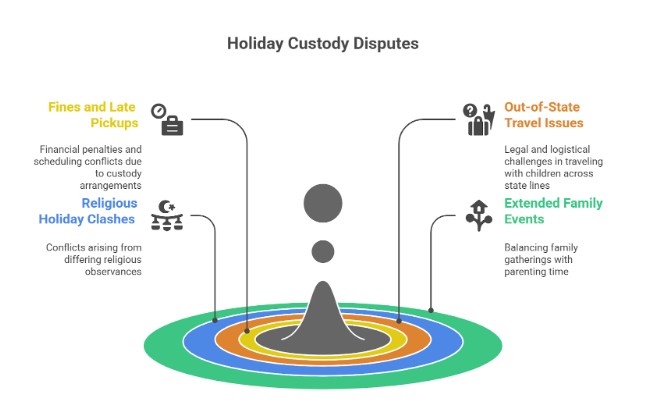
The holidays can bring up some wild child custody conflicts. Transportation delays, religious differences, and clashing family traditions top the list of headaches for co-parents this time of year.
Fines, Late Pickups, Out-of-State Travel Issues
Transportation turns into a mess during the holidays. Traffic jams and bad weather can cause parents to arrive late for pickups or drop-offs.
Some custody agreements slap on financial penalties for being late. Fines can run from $25 to $100 per hour, depending on the court order. Parents really need to know what their agreement says.
Out-of-state travel requires extra planning and may require court approval. Lots of parents forget to ask for permission weeks ahead, as their orders require.
Travel disputes can pop up over:
- Missing paperwork
- Not sharing travel plans
- Forgetting to share emergency contacts
- Extending trips without asking
Even a mild winter storm in Northwest Florida can disrupt flights or make driving hazardous. Parents need backup plans if the weather ruins the exchange schedule.
Religious Holiday Clashes
Different religious backgrounds can make custody tricky during sacred holidays. One parent may want the child at Christmas services, while the other prefers Hanukkah traditions.
Court orders don’t usually spell out religious observances. That leaves room for arguments about which traditions the child follows.
Common religious disputes include:
- Which services does the child attend
- Gift-giving expectations
- Holiday food rules
- Participation in ceremonies
Parents might worry about confusing the child with different beliefs. Sometimes, two holidays overlap—like Easter and Passover—and the schedule gets complicated.
Extended Family Events Versus Parenting Time
Family reunions and holiday get-togethers can clash with custody schedules. Grandparents, aunts, and uncles don’t always check the calendar before planning events.
Parents often feel pressure to show up for family events even when it’s not their time. They might ask to swap weekends or request extra hours.
Last-minute invitations can be especially stressful. The extended family doesn’t always understand custody rules and expects plans to change on a dime.
Common conflicts include:
- Weddings during the other parent’s time
- Surprise visits from far-off relatives
- Annual traditions that don’t fit the schedule
- Grandparents who favor one parent’s plan
Sometimes parents use family events as an excuse to keep the kids longer than allowed, which just breeds resentment.
Documentation matters when family events affect custody. Parents should put requests in writing and get approval before changing the schedule.
How Custody Mediation Helps Holiday Parenting Plans
Mediation gives separated parents a practical way to build holiday schedules everyone can live with. The process stays private, saves money, keeps kids out of the drama, and helps parents stick to the agreement.
Mediation Process in Florida
Florida courts often tell parents to try mediation before heading to trial over custody. A neutral mediator helps both parents talk through their holiday concerns and find solutions that work.
The mediator doesn’t make decisions for anyone. They just guide the conversation and help parents develop their own agreement.
Most mediation sessions go like this:
- Both parents meet with the mediator in joint session and private, individual meetings
- Each parent shares their concerns, needs, and wants
- The mediator looks for common ground
- Parents work together to build a detailed holiday schedule
- They write up the agreement and sign it
Sessions usually last two to four hours. Some families only need one meeting, but others come back a few times to sort out all the details.
The mediator makes sure both parents understand the agreement before anyone signs. Once signed, the holiday plan becomes part of the official parenting plan.
Benefits: Privacy, Flexibility, Cost Savings
Mediation costs a lot less than court. Most families share the cost and pay $300 and up for mediation, while a trial can cost thousands in legal fees.
Key perks:
- Privacy: Family business stays private, not in public court records
- Speed: You can get a session in weeks, not months
- Control: Parents work together with the Mediator to make their own choices instead of a judge
Mediation lets parents create custom solutions for their family. The court orders use standard templates that don’t always fit real life.
Parents can include special traditions, travel plans, and family visits in their agreements. They can also plan for changes as kids grow up.
Mediation takes place in comfortable spaces rather than courtrooms creating a relaxed vibe that helps parents focus on solving problems and not fighting.
Protecting Children from Exposure to Conflict
Holiday custody fights can really weigh on kids. They often feel stuck in the middle when parents argue about where they’ll spend special days.
Mediation keeps these tough conversations out of children’s ears. Parents work out their differences behind closed doors, not in front of the kids.
Mediators encourage parents to focus on what helps their children most. The process steers the conversation toward the kids’ needs, not just what each parent wants.
Children benefit when parents use mediation because:
- Less stress and anxiety during the holiday season
- More predictable schedules they can count on
- Both parents stay involved in special celebrations
- Reduced exposure to adult conflicts and arguments
Kids usually do better when they know the holiday plan in advance. Clear agreements help them get ready for transitions between homes.
Tips for Creating a Smooth Holiday Parenting Schedule
Setting up a clear holiday schedule can prevent a lot of drama. It helps kids feel more secure during special times—at least, that’s the hope.
Finding the right balance between different schedule types, adapting to family quirks, and building in backup plans for surprises is key.
Examples of Alternating Versus Split-Day Holiday Schedules
Alternating schedules mean each parent gets the whole holiday, but in different years. One parent gets Christmas this year, the other gets it next year. This works well for big holidays like Christmas, Thanksgiving, and Easter.
Split-day schedules divide a single holiday between both parents. For example, kids might spend Christmas morning with one parent and the evening with the other. This way, both parents get to share the same holiday every year.
| Schedule Type | Best For | Example |
| Alternating | Major holidays | Mom gets Christmas 2025, Dad gets Christmas 2026 |
| Split-day | Single holidays | Christmas morning with Dad, afternoon with Mom |
Some co-parents mix both methods. They might alternate Thanksgiving, but split Christmas Day every year. The decision usually comes down to family traditions and how far apart the parents live.
Tips for Blended and Long-Distance Families
Blended families have extra layers with step-kids and overlapping schedules. It’s smart for co-parents to coordinate with new partners early.
Long-distance co-parenting needs longer holiday blocks. Quick visits just don’t work when parents live far apart. Giving each parent extended winter and summer breaks often makes more sense than splitting single days.
Video calls can help distant parents stay in the loop during holidays. The parent at home should encourage kids to call the other parent during celebrations. That way, both parents stay involved even when they’re miles apart.
Blended families might also want to discuss gift-giving rules. Too many presents from different households can overwhelm kids. Setting spending limits can help keep things balanced.
Include Flexibility Clauses for Emergencies
Holiday plans sometimes fall apart—illness, weather, or family emergencies can pop up fast. Smart parenting plans include flexibility clauses that let parents adjust without going to court every time.
Common flexibility rules include:
- 48-hour notice for non-emergency changes
- Make-up time when holidays are missed
- Video calls when in-person visits can’t happen
- Shared decision-making for last-minute changes
Parents should agree on what really counts as an emergency like medical issues and bad weather. Work conflicts? Only if they’re truly unavoidable.
It’s best to write down any schedule changes. That way, there’s no confusion later, and both parents can show they agreed. Apps like OurFamilyWizard automatically keep records of updates.
Some families add a “right of first refusal” clause. If one parent can’t use their scheduled holiday time, they have to offer it to the other parent before asking relatives to babysit.
Modifying a Holiday Parenting Plan in Florida
Sometimes, holiday parenting plans need a refresh when family life shifts. Parents can go through mediation or the courts, but they must show valid reasons that demonstrate the change is in the child’s best interests.
When Modifications Are Necessary
Florida courts only allow holiday plan changes when parents can show a big shift in circumstances. Something significant must have happened since the original plan was approved.
Common reasons for holiday modifications include:
- Job schedule changes that affect holiday availability
- Relocation of one parent to a different state or city
- Changes in the child’s age, needs, or preferences
- New family traditions or religious practices
- Health issues that impact travel or celebration plans
The parent requesting the change has to show that the current holiday schedule no longer works in the child’s best interests. Courts won’t approve changes for minor hassles or just because someone feels like it.
Usually, parents should wait at least 2 years after the original plan before requesting changes. But if something major happens, courts might consider it sooner.
Mediation Versus Court-Approved Changes
Parents in Florida have two main ways to update holiday parenting plans. They can work together in mediation or ask a judge to decide.
Mediation benefits include:
- Lower costs than court proceedings
- Faster resolution times
- More control over the final agreement
- Less stress for children and families
A neutral mediator helps parents talk through concerns and find solutions. Most families lean toward this route since it keeps things private and allows for creative fixes.
If parents can’t agree in mediation, the court is the next step. One parent files a petition and must present evidence of the requested changes.
Judges look over everything before making a decision. This route takes longer and usually costs more than mediation.
Tips for Documenting Reasons for Modification
Good documentation makes a big difference when requesting a change to a holiday plan. Parents should start gathering evidence as soon as they spot issues with the current schedule.
Essential documentation includes:
| Document Type | Examples |
| Work Records | New job schedules, shift changes, travel requirements |
| Medical Records | Health issues affecting holiday participation |
| School Records | Academic schedules, extracurricular activities |
| Communication | Text messages and emails showing scheduling conflicts |
Parents should keep notes about when the current plan falls apart. Dates, times, and specific problems really help paint the picture.
Photos and videos can show how holiday celebrations have changed. They help judges see the real impact on kids and families.
It’s also smart to document any efforts to fix things outside of court. That way, it’s clear that both parents tried to work together before involving the legal system.
Final Thoughts
Holiday custody disputes don’t have to ruin family celebrations. Mediation offers a path forward that puts children’s needs at the center.
Parents who walk into mediation with open minds often find solutions they hadn’t even considered.
This process lets both sides share their worries and work together, even if it’s not always easy.
Flexibility goes both ways. What works this year might need a tweak next year as kids grow or life changes.
The mediator helps parents find common ground. They know Florida law and neutrally guide families toward realistic agreements, not just wishful thinking.
Kids get to experience different traditions and spend real time with both parents.
Once you reach an agreement, documentation matters. Clear written plans prevent things from getting messy or confusing later.
Instead of fighting for every inch, parents can focus on making good memories.
The goal? Happy, well-adjusted kids who know both parents love them.
Holiday parenting plans work best when they’re tailored to each family’s quirks and needs.
Frequently Asked Questions
What holidays must my Florida Parenting Plan include?
Even though Florida law doesn’t list every holiday by name, your Parenting Plan must clearly specify how children will spend major holidays and school breaks (such as Thanksgiving, Christmas/winter break, spring break) as part of the schedule.
Do holiday schedules override regular time-sharing during the year?
Yes. Holiday time-sharing provisions take precedence over your regular weekday/weekend schedule, meaning the Parenting Plan must clearly state who has the child for each holiday or break.
Can we alternate major holidays every other year in Florida?
Yes. Many Florida Parenting Plans allow parents to alternate key holidays (for example, Parent A has Christmas in odd years, Parent B in even years). Courts generally approve these arrangements if they serve the child’s best interests.
Is mediation required if parents dispute the holiday parenting schedule?
While Florida doesn’t always require formal mediation for every holiday dispute, mediation or another dispute-resolution process is strongly encouraged and often used before court intervention in custody/time-sharing conflicts.
How should travel or out-of-state holidays be handled in the plan?
Your Parenting Plan should include detailed provisions for travel: specifying when children may travel out of state, who is responsible, how costs are shared, and how long the trip can last. Without these details, disputes often arise.
What happens if we need to change the holiday schedule later?
You can modify the holiday portion of your Parenting Plan only through either a mutually agreed-upon amendment filed with the court or by demonstrating a substantial change in circumstances and court approval.
What are common mistakes parents make with holiday parenting plans?
Common mistakes include failing to define exact exchange times, neglecting travel logistics, forgetting school-break periods, using vague language like “Christmas weekend” without dates, and omitting how to handle unforeseen changes.
What holidays must my Florida Parenting Plan include?
Your Parenting Plan must specify how children spend major holidays and school breaks, such as Thanksgiving, Christmas/winter break, spring break, and summer vacation.
Do holiday schedules override regular time-sharing during the year?
Yes. Holiday time-sharing provisions take priority over the regular weekday/weekend custody schedule whenever they overlap.